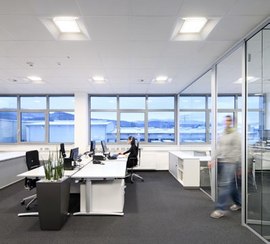
Zumtobel DISCUS Evolution LED spotlight system

DISCUS Evolution is an alternative to HIT systems with up to 42 W and halogen systems with up to 100 W

FLOS CAN CAN

Can Can and Mini Can Can by Marcel Wanders

FLOS KELVIN LED

Designed by Antonio Citterio with Toan Nguyen

DIESEL FOSCARINI

Successfull Living by Diesel Foscarini. Enamorate de esta colección.

REDES SOCIALES

Seguinos en las redes y no te pierdas de ninguna novedad.

Mostrando entradas con la etiqueta Conceptos. Mostrar todas las entradas

lunes, 14 de mayo de 2012

Colección 2012/2013 Delta Light

Ya estan publicadas las novedades 2012/2013 de DeltaLight!!!.

Los invitamos a ver el catalogo en nuestro facebook o haciendo click en el siguiente link.


lunes, 16 de abril de 2012

DarkoLighting en LIght + Building 2012 Frankfurt

Arranco Light+Building 2012,  la feria comercial internacional en iluminación más importante para los profesionales de los sectores de la arquitectura, construcción, decoración y tecnologías relacionadas.  Y como no podía faltar Darko se hace presente con representantes de todas sus oficinas. 

Todos los líderes del mercado de las áreas de la iluminación, ingeniería eléctrica y automatización en la edificación toman parte en esta feria bi-anual del sector. En estos entornos únicos los principales expositores presentan sus últimos productos, innovaciones y tendencias.

En breve publicaremos fotos y link para que vean mas fotos en facebook a medida que vayamos recorriendo la feria.


lunes, 19 de marzo de 2012

Kai-Uwe Bergmann expondrá en la UP


El arquitecto Kai-Uwe Bergmann, socio del prestigioso estudio de arquitectura BIG – Bjarke Ingels Group abrirá el ciclo lectivo 2012 de la Facultad de Arquitectura. La cita será el lunes 26 de marzo, a las 18:30hs, en la sede de Jean Jaurès 932.

BIG-Bjarke Ingels Group es un grupo con base en Nueva York y Copenhague de arquitectos, diseñadores y pensadores que operan en los campos de la arquitectura, el urbanismo, la investigación y el desarrollo. BIG ha creado una reputación por completar los edificios que están en programación y ser técnicamente innovador, ya que son concientes de los costos y el  consumo de recursos.

Su producción arquitectónica  demuestra una alta sensibilidad hacia  las demandas particulares de contexto, del sitio y del programa. Los proyectos de BIG recientemente terminados incluyen el pabellón danés en la Expo Mundial de Shanghai (2010) y La Casa 8 (2010) siendo distinguida recientemente con el Premio Nacional de Honor AIA y el premio Wall Street Journal a la innovación del año. Los proyectos que se están diseñando en América del Norte, incluyen la base  600 West Tower 57 en la ciudad de Nueva York diseñada para Durst Fetner Residencial que iniciará la construcción en la primavera de 2012 y el próximo  Centro de Arte Kimball  en Park City, Utah.

Acerca del arquitecto

Kai-Uwe Bergmann, socio de BIG,  trae su experiencia a las propuestas de todo el mundo, incluido el trabajo en Asia, Europa, Oriente Medio y los Estados Unidos. Kai-Uwe dirige el gran desarrollo de negocios que actualmente tiene la administración que trabaja en más de 10 países diferentes. Además de estas funciones, Kai-Uwe es también Director de Comunicaciones. Registrado como un arquitecto en los EE.UU., Reino Unido y Dinamarca, Kai-Uwe es también un arquitecto certificado LEED AP, fue director de proyecto del  primer plan maestro de Carbon Neutral en  Asia Central - Zira Island, en Bakú, Azerbaiyán. Además de su práctica arquitectónica, Kai-Uwe ha estado activo como Profesor Visitante en la Escuela de IE Universidad de Arquitectura y Gestión del Diseño en Madrid y ha actuado como jurado en muchos premios nacionales e internacionales.

http://www.palermo.edu/arquitectura/eventos/Bergmann-expondra-en-universidad-palermo.html

martes, 13 de marzo de 2012

DarkoLighting Celebra


DarkoLighting fue seleccionado luego de un largo proceso para el suministro de luminarias del proyecto Celebra. El proyecto de iluminación fue realizado por la Arq. Eli Sirling


Celebra es un proyecto de vanguardia dentro de Zona America que se destaca por la sustentabilidad y la utilizacion de energias renovables y LEDs entre otras cosas. Celebra se encuentra asimismo en proceso de certificación LEED Green Bulding.

El sueño de todo arquitecto es proponer una gran idea y lograrla sin limitaciones en cuanto a su creatividad.
Llevado a cabo por los Arquitectos Carlos Ott y Carlos Ponce de Leon, el Edificio Celebra supone un hito arquitectónico de la más alta calidad internacional y una expresión de las nuevas tendencias mundiales en soluciones tecnológicas y constructivas, requeridas por muchas de las empresas para instalarse en el país.


Con más de 10.000m2 de espacio empresarial concebido según estándares del más alto nivel de calidad y los máximos cuidados al medio ambiente, Celebra, sin lugar a dudas, será un paso importante en la complementación de un Parque de Negocios y Tecnología con elevados índices de competitividad, regionales e internacionales.


Tanto por la tecnología constructiva empleada, los materiales, las soluciones al manejo racional de la energía, el uso adecuado del predio y de su entorno inmediato, el tratamiento especial del agua potable y la minimización en el consumo de combustibles fósiles*, el edificio Celebra se convertirá en un ícono de innovación en el campo de los edificios verdes en el Uruguay.


La Sustentabilidad y algunos de sus factores:

  • Paneles fotovoltaicos situados sobre parte de los estacionamientos vehiculares para lograr una reducción significativa en la cantidad de energía que se utiliza desde la red pública
  • La electricidad adicional generada será usada para la iluminación propia del estacionamiento, con capacidad para
  • Iluminación de tipo LED de alta eficiencia en el edificio y su entorno.
  • 325 vehículo 

jueves, 21 de julio de 2011

Nuevas Lineas para proyectos institucionales

Para los que ya estaban aburridos de las luminarias y de la iluminación tradicional estuvimos en la feria mas importante de iluminación de Europa y nos trajimos muchas novedades para compartir.

Presentamos en esta oportunidad una nueva linea de artefactos que estaran disponibles para que puedan evaluar en sus proyectos.

Por favor no duden en consultarnos, estamos para eso. Hay muchas novedades para destacarse y hacer algo diferente

Como siempre pueden ver mas fotos en nuestro Facebook haciendo click aqui, no se olviden de hacerse Fan y estar al dia con todo lo ultimo sobre iluminación.


iluminacion

iluminacion

iluminacion

iluminacion

domingo, 22 de mayo de 2011

Controlling LEDs Part 9 - Control types for LED products

Phase controlImage via Wikipedia
The following control technologies refer to the signal and wiring between the control on the wall and the fixture or lamp. LED retrofit lamps generally only use forward or reverse phase control technologies. LED fixtures may use any method, and it is independent of the driver type (constant current or constant voltage).

The compatibility of a dimmer with a particular LED fixture begins with making sure they both use the same control method. These control technologies are used in standalone applications and control systems as well as in wired and wireless lighting control systems. Controls that use phase control to control a lamp may also use a wireless technology to communicate between loads or within an entire home lighting control system.

Forward Phase Control:

Typically used for incandescent and magnetic low-voltage (MLV) light sources, this is the most common method of dimming control. The National Electrical Manufacturers Association (NEMA) estimates that there are approximately 150 million forward phase control dimmers installed residentially, and many of these are likely to control LED replacement lamps in the future.

Working well with forward phase control is critical to the success of LED bulbs because of the huge existing installed base. Unfortunately, these controls were never designed for LED lights and are not UL listed to operate LED lights, so the performance is hit or miss and in many cases will cause LEDs to flicker, drop out, pop on or not dim very low. These dimming controls may also require multiple lamps per control in order to meet the minimum load requirements of the control.

New forward phase control dimmers have recently entered the market that have been specially designed to reduce or eliminate the problems seen with controlling LED loads on existing incandescent dimmers. These dimmers are UL listed with specific LED loads, ensuring an acceptable application.

Reverse Phase Control:

Typically used to control electronic low-voltage (ELV) light sources, reverse phase control is best for capacitive loads such as LED drivers. While it does not have the installed base that incandescent dimmers have, this control type is often more successful at high performance LED dimming without flicker.
Reverse phase dimmers were designed for the lower power “electronic loads” of electronic low-voltage  transformers, so they tend to work better with the drivers required for LED loads.
Unfortunately, these controls nearly always require a neutral wire to power the internal electronics, and not every electrical back box has a neutral present. Installing reverse phase dimmers in older buildings may require that a neutral wire is pulled to the box. Furthermore, these types of controls are not as widely available in the marketplace and are generally more costly.

Three Wire Control: 

This standard fluorescent control type is used by dimmers that were created for fluorescent dimming. Three-wire controls have a separate line voltage wire that carries the phase control signal separate from the power wires.
Three-wire is more precise than forward or reverse and the control signal is much more immune to electrical noise. There are over 30 years of history in the industry of using 3-wire controls to dim fluorescent ballasts to 1% without flicker, drop out, or pop on. Of course, to get this performance, a third line voltage control wire must be pulled to the fixture.

0-10V Control:

This analog control standard has been used in energy management controls such as occupancy and daylight sensors and is now becoming popular with many LED products. This control type is isolated and considered low voltage class 2, enabling it to be safe to the touch and allowing for simplified wiring.
One of the benefits of 0-10V controls is that it is defined in the IEC standard number 60929 Annex E. Unfortunately, some manufacturers don’t follow this standard. This leads to drivers and lamps that claim to be 0-10V compatible but drop out or pop on, or that dim backwards with the lowest light at the top of the  control and the brightest light at the bottom. Some 0-10V products do not work at all with controls designed for 0-10V ballasts, which are the majority of installed 0-10V controls. Since the control signal is a small analog voltage, long wire runs can produce a significant drop in the signal level resulting in different light levels from different drivers controlled by the same control device.

DALI :

The DALI digital standard originated in Europe for control of fluorescent ballasts, but is now commonplace in commercial buildings in the United States. DALI is also defined in IEC standard 60929 Annex E. It allows for digital control of individual fixtures, maximizing the user’s control and productivity. DALI provide addressing of individual fixtures and status feedback from the drivers. This makes it easy to digitally assign occupancy sensors, daylight sensors, time clocks, manual controls and other controls to one or many fixtures without complicated wiring. This opens up an entire suite of energy-saving and system-monitoring control schemes where the design and setup is all done within software, making designing with them simple.

DMX:

Typically used in theatrical applications, DMX remains popular with RGB LED applications where multiple channels are necessary for individual color control. Some manufacturers are using DMX as the control type for white light in general illumination applications, which can often be complicated in terms of wiring, addressing, and interacting with other controls in the space.

domingo, 15 de mayo de 2011

Controlling LEDs Part 8 - What is the minimum or maximum number of LED fixtures/lamps that can be connected to one dimmer?

What is the minimum or maximum number of LED fixtures/lamps that can be connected to one dimmer?


A common problem with LED system operation involves overloading the driver. LED drivers are rated for a maximum load (in volts, amps, and/or watts) that must not be exceeded. Similarly, some LED drivers may not perform well if too little load is put on them.

The number of lamps able to be installed on a single phase control dimmer may seem like an easy question to answer. However, it is not as simple as looking at your 600-watt dimmer and dividing 600 by the 15-watt LED lamp you have selected to determine that 60 lamps can be used on a circuit. You may only be able to use 100 watts of the LED load on a dimmer rated for 600 watts. While the LED lamp may only draw 10 watts continuously, it may have a start-up inrush current or repetitive current during every half-cycle that makes it appear much worse. That 15 watt LED lamp will appear to the dimmer as a 100 watt incandescent load, so if you use more than 90 watts of that LED, you will overload the dimmer.

Neglecting this transient current can put significant stress on the dimmer and can cause premature product failure or undesired system performance (such as excessive acoustic noise). This transient electrical stress may limit the maximum number of lamps you can install on one dimmer. The average stress that has been observed is the equivalent of a 100W incandescent, even for LED loads that are less than 20W. 

A minimum number of fixtures may be required to operate a dimmer because of the 25-watt to 40-watt minimum load that most incandescent dimmers require to operate correctly under all conditions. When using incandescent bulbs, the minimum load requirement was easily met with usually only a single bulb. However, with LEDs, four or more loads may be needed on a dimmer in order to meet the required minimum load.

martes, 10 de mayo de 2011

Controlling LEDs Part 7 - What is the dimming performance of the product?

Each manufacturer defines dimming in a different way, but what you need to know is whether the dimming will be distracting or have noticeable, unexpected drops in light. The public’s experience with incandescent dimming is that it is smooth and continuous. Specifically, a change in the control (dimmer) position should be reflected by an equal change in light level. There should be no abrupt change in light level as the light source is being dimmed. 

Even more important is ensuring that there are no points of flicker in the dimming range. Flicker is the unexpected modulation of light level that is visible to the human eye. Flicker can come from many sources, including line noise, control noise, component tolerance, and LED driver circuit design. Flicker can be continuous (happening all of the time), or intermittent (only happening some of the time or at certain light levels). A good driver should account for all of these factors and still provide flicker-free, smooth, and continuous dimming.

Other undesired behavior can occur when dimming an LED. A properly designed driver should not have any of the following problems:

  • Pop-on: After being dimmed to a low light level and switched off, sometimes LED bulbs will not turn on until the dimmer’s slider is moved up. This is referred to as “pop-on,” which is especially challenging in 3-way situations where lights can be turned on/off from different locations, not just using the dimmer.
  • Drop-out: There should be no drop-out, so the light should only turn off when the switch is turned off. This can be achieved by utilizing the low end trim settings available on many wallbox and system level dimmers to ensure that the lights remain on at their lowest light level at the bottom of the dimmer’s travel.
  • Dead-travel: Adjusting the control without a corresponding change in light level is undesirable
  • Audible Noise: Buzzing from the lamp, or from the dimmer due to the lamp.
  • Shimmer: Small changes in light intensity. This can usually only be noticed at medium to low light levels, and often only at the periphery of vision.

martes, 3 de mayo de 2011

Controlling LEDs Part 6 - What is the dimming range of the product?

Incandescent lamps dim to below one percent perceived light, which looks like an orange filament glow. The dimming range of an LED lamp or fixture can vary greatly from one device to another.
Some may dim to a minimum level of only 50 percent, while a different product may dim to one percent. Additionally, manufacturers will quote measured light numbers, but consumers are familiar with perceived light. 

What is the difference?


Measured light output is the quantifiable value of light measured by a light meter or similar device. This is the dimming percentage indicated on LED product specification sheets.


Perceived light is the amount of light that your eye interprets because of pupil dilation. The eye’s pupil dilates at lower light levels, causing the amount of light to be perceived higher than measured (e.g., 20 percent measured light equals 45 percent perceived light). The equation for determining perceived light is to take the square root of the measured light percentage (e.g. √0.2 = 0.45). You need to select the dimming range of your fixture or lamp that will be suitable for your application. A product that dims to 20 percent measured light (45 percent perceived) wouldn’t make sense in a media room, but may be the energy-saving solution necessary for an office. If an LED fixture or lamp spec sheet does not state the dimming range, you should contact the manufacturer for that important piece of information.

It is important to know that the dimming range of a product is based solely on the driver. The integral driver will determine the dimmability of a screw-in LED retrofit lamp and an external driver will determine the dimmability of an LED fixture. Each dimmer may have varying features that will affect your ability to trim out flicker if it exists and minimum load requirements, but it will not affect the dimmability of a product. The driver will determine the low-end light level and the performance. Finally, be aware that the dimming  range of a single product may vary based on what control is used.


lunes, 2 de mayo de 2011

Controlling LEDs Part 5 - What type of LED product am I using: an LED lamp or LED fixture?

LEDs are low-voltage devices. Therefore, additional electronic components are typically required to convert the line-voltage power to a low voltage for the LEDs. These electronics may also interpret control signals, and dim the LEDs accordingly. These devices are referred to as LED drivers.

LED luminaires come in two distinct types: the LED bulb (also called an LEDi or retrofit lamp) and the LED fixture.

LED bulbs have Edison-base sockets and are meant to replace standard incandescent or screw-in CFL bulbs. The bases of these bulbs have integral drivers that determine if they are dimmable, and if so, what the dimming performance is.

LED fixtures can vary from cove lights to down lights and usually have an external driver. Some fixture manufacturers offer different driver options on the same fixture to support different control technologies or applications (such as dimmable vs. non-dimmable).


There are two different types of drivers. LED drivers may be constant voltage types (usually 10V, 12V and 24V) or constant current types (350mA, 700mA and 1A).
Just as their names would suggest, a constant current driver provides a constant current, such as 700mA, to a pre-made LED array that is designed to operate at or below that current level. This is great for a down light, sconce or other LED fixtures that use only one light source per driver (much like a fluorescent lamp with its associated ballast). Note that some drivers support multiple currents, making them more flexible when designing a fixture.


A constant voltage driver provides a constant voltage to one or more LED arrays connected in parallel. A constant voltage driver is used in areas where you may have a variable amount of fixtures, such as a cove or under-cabinet light. These are similar, or sometimes identical, to electronic or magnetic low voltage power supplies (such as those used with MR16 lamps) and often have 12V and 24V outputs.


These two types of drivers are NOT interchangeable, and it is the design of the LED array that determines which driver is appropriate. Often this is application-based, but it is still the configuration of the LEDs that determines if a constant current or a constant voltage driver is needed. Some drivers are manufactured to operate specific LED devices or arrays, while others can operate most commonly available LEDs. Additionally, the long-life benefits of LEDs would be reduced if the driver was not designed for an equally long life.

The instantaneous response of LEDs to changing current makes them highly susceptible to flicker, especially compared to incandescent sources. One of the most important LED driver features to understand is the quality of the DC output voltage of the driver. Finally, be cautioned that remote mounting of the driver could result in potential voltage drops, power losses, or noise susceptibility on the DC wiring that must be properly accounted for.


Extracted from "Controlling LEDs" Copyright 01/2011 Lutron Electronics Co. Inc. P/N 367-2035 REV. B

domingo, 1 de mayo de 2011

Cree delivers LED alternative to linear fluorescent fixtures

CREE, empresa pionera en tecnologías de LEDs, lanza al mercado su nueva linea de luminarias para reemplazar lluminarias fluorescentes.

Esta noticia es muy importante ya que no estamos hablando de lámparas o tubos para reemplazo en luminarias tradicionales sino que estamos frente a una nueva tendencia de artefactos y luminarias especialmente diseñadas para funcionar con Leds y aprovechar todas sus caracteristicas al máximo.

Es claro que está será la tendencia en futuro proximo y cree como siempre se muestra pionera.


Cree delivers LED alternative to linear fluorescent fixtures
Cree’s CR SSL luminaire designs deliver 90 to 110 lm/W efficacy utilizing LEDs that radiate upwards into a mixing chamber and reflector that distributes light through a diffuser.
Cree has announced the LED-based CR family of solid-state-lighting (SSL) fixtures that are designed specifically as alternatives to high-end, architectural, fluorescent fixtures in applications such as offices and schools. Delivering 90 to 110 lm/W efficacy, the fixtures, according to Cree, will offer payback inside of one year relative to T8 linear fluorescent fixtures with comparable light output.

jueves, 28 de abril de 2011

Controlling LEDs Part 4 - Five questions when trying to dim an LED product?

Before you commit yourself or your customer to investing in LED technology you need to understand its limitations, especially when it comes to dimming control compatibility. Many LED luminaire manufacturers are new to the lighting industry and are not familiar with the multitude of control types and the corresponding product design requirements that accompany them. This has resulted in “dimmable” products that do not work as claimed, that never turn off completely, or that flicker. These are major problems that need to be addressed so that consumers do not associate all LEDs with poor performance and become averse to using them. High-performing LED products do exist, but you need to ask the right questions to make sure you have chosen one of those products appropriately.

Answering the following five questions will allow you to align your expectations with the potential
performance of your selected LED dimming system.

  1. What type of LED product am I using: an LED lamp or LED fixture?
  2. What is the dimming range of the product?
  3. What is the dimming performance of the product?
  4. What is the minimum or maximum number of fixtures/lamps that can be connected to one dimmer?
  5. On what type of control does the LED product operate?
The following articles detail what you need to know to answer these questions.

Stay tuned...

Extracted from "Controlling LEDs" Copyright 01/2011 Lutron Electronics Co. Inc. P/N 367-2035 REV. B

sábado, 23 de abril de 2011

Controlling LEDs Part 3 - Why Dim LEDs?

Similar to fluorescent, incandescent and other conventional light sources, dimming LEDs saves energy at a roughly 1:1 ratio. This means that if you dim LEDs down to 50% of their light output you will save nearly 50% of your energy usage. So not only do you save by using a more efficient source, you save even more energy by dimming LEDs.


Dimming LEDs also makes them run cooler, which should extend the life of the electronic components of the driver, as well as the phosphor on the LEDs. This will extend their life, doubling or tripling the LEDs lumen maintenance. Research is ongoing to better quantify the relationship of dimming LEDs and lifetime extension.


Dimming any lamp, be it incandescent, CFL or LED enhances ambiance, so whether you are in a restaurant, theater or presentation space, you can create the environment that the lighting designer intended.

Dimming offers many other benefits, including:

  • Space Flexibility 
    • Dimming control systems provide for space flexibility so that what may be an office space today could easily be converted into a call center tomorrow, or a gymnasium can be used as a theater or cafeteria just by adjusting the control of your lighting. Your home and your workplace should be designed to complement your needs. As your needs change throughout the day, your lighting should adapt as well; bright to read a book, but dim for computer use. Whether you are at home or at work, lighting control can create a comfortable atmosphere to support your activities throughout the day.
  • Enhanced Safety 
    • Lighting controls can enhance the safety and security of your home. You can control both interior and exterior lights from the car as you approach your driveway to ensure optimal visibility and can even connect to security systems to turn on lights in case of an emergency.
  • Increased Productivity 
    • Lighting control also increases productivity allowing the user to select the level he/she needs to reduce eye strain and fatigue so that they can work at peak performance for more of the day, or so students can concentrate better and learn more at home or at school. 

jueves, 21 de abril de 2011

Controlling LEDs Part 2 - Advantages and Limitations of LEDs for General Illumination


LEDs Advantages for General Illumination
  • High Efficacy (Lumens per Watt) LED-based lighting fixtures can achieve efficacies ranging from 25 LPW to over 80 LPW, compared to an incandescent efficacy of 5-10 LPW.
  • Longevity LEDs can achieve useful lifetimes ranging from 25,000 hours to up to 100,000 hours, compared to ~1000 hours for an incandescent. 
  • LEDs do not contain hazardous materials as compared to mercury vapor in CFLi bulbs.


LEDs Limitations for General Illumination

  • Higher cost High Brightness LEDs, necessary for general illumination, are expensive. They also require electronic drivers to convert conventional AC voltage to discrete DC voltages for the LED arrays.
  • Limited Applications Due to the relatively young technology and timeline for wide acceptance, LED-based lighting fixtures are not always available for every application or aesthetic requirement. 
  • Controls compatibility Due to the wide range of LED-based lighting product types, not all LED lamps are dimmable, and the ones that can be dimmed may be limited in dimming performance and system compatibility. 

Enhanced by Zemanta

miércoles, 20 de abril de 2011

Controlling LEDs Part 1

Ten years ago, many people didn’t even know what an LED was. Today, they’re the new hot item on the shelves – and everyone wants to use them. Often, designers do not know how to control LEDs or they have had negative experiences working with them. This articles will provide a brief overview of what an LED is and how to use LEDs for general illumination applications and the advantages and limitations of doing so. It will also go into detail about why you should consider dimming LEDs and what questions need to be answered in order to dim LEDs properly to meet your expectations. The overall goal of this article is to make you more comfortable with using LEDs
on your projects.


What is an LED?


A Light Emitting Diode (LED) is an electronic device that produces light when an electrical current is passed through it. The wavelength (or color) of light that is emitted is dependent on the materials from which the LED is made. LEDs are available in many colors, including red, blue, amber, green, and near-UV colors, with lumen outputs ranging from 10 lumens to 200 lumens. The LEDs used predominantly in general illumination applications are “Phosphor Converted Blue” LEDs, which are blue LEDs that have a layer of yellow phosphor placed over the LED. The phosphor absorbs some of the blue light, and emits yellow light. When the unabsorbed blue light mixes with the yellow light it creates what your eye perceives as “white” light.


IMAGE OF DIFFERENT TYPES OF LEDS.


From Controlling_LEDs by LUTRON

sábado, 16 de abril de 2011

THE MUTED VOICE OF LIGHTING DESIGNERS BY JAMES BEDELL

There is little question that lighting has a direct impact on energy consumption. There is also little argument that lighting fundamentally changes a space. Lighting is elemental to how we live and the spaces we occupy everyday. The rules of the game and the expectations for what light does are changing rapidly. By now everyone has heard that the future of lighting will be the LED and most educated consumers understand that the end is near for the incandescent light bulb. The lighting industry, specifically those who build light bulbs and fixtures are seizing the opportunity to bring new products to market. The news media and politicians are there to spread misinformation about the future of lighting. 
What's missing from the conversation is a mediator. Someone who can stand between the claims of product manufacturers, the limited information provided by the news media, politicians and the big box stores to provide lighting advice. Not everyone can afford the services of a lighting designer, and I understand that. But where is our voice in the public sphere to help educate the public about an industry that is so rapidly changing? The only lighting designer that is ever quoted on say, the incandescent phase-out, is Howard Brandston who is opposed to it and helping fight for the law's repeal. 
Where are the designers who want to help the general public not only understand the regulations, but simply understand the importance of good lighting in their daily lives? This is a moment the lighting design community should be seizing as a voice for the future of industry, speaking directly to the public. This is the only way we can make our influence known felt, and more over, the only way we can hope to inspire good lighting, not just for the tiny sliver of clients we can service, but also for the broader public. 
If you a lighting designer who blogs regularly, post your link in the comment section below and I'll do my best to spread your content. I want to see a vibrant public discussion of lighting from designers all over the globe. Let's make the world a little be better by helping share ways to create beautiful, sustainable lighting.


Posted by James Bedell at http://jamesbedell.com/the-muted-voice-of-lighting-designers

lunes, 11 de abril de 2011

Manipulating Light to Shape Experience and Perception

"To reveal art and conceal the artist is art's aim." - Oscar Wilde


Glen Shrum of Architectural Lighting Magazine recently posted a great article“Light Art Matters: A Closer Look at the Ideas Behind the Work”. The author highlights two fundamentally different schools of thought for light artists – those who conceal lighting systems and those who reveal them.

lunes, 4 de abril de 2011

La iluminación más sostenible es la luz del sol


La iluminación más sostenible es la luz del sol

26 de marzo de 2011

La UPC School organiza la conferencia del Lighting Designer Kevan Shawn sobre sostenibilidad e iluminación. Kevan Shaw: “La iluminación más sostenible es la luz del sol”.
¿Estamos preparados para asumir los cambios que supone adoptar una iluminación sostenible? Esta es la pregunta que planteó Kevan Shaw, prestigioso lighting designer y fundador del estudio Kevan Shaw Lighting Design (KSLD), en la conferencia que con el título "Lighting Sustainability as a Design Goal”, ofreció dentro del ciclo Lighting Design que organiza la UPC School con la colaboración de Artemide, empresa líder del sector de la iluminación. En su charla analizó las estrategias necesarias para conseguir la eficiencia energética en el campo de la iluminación de espacios arquitectónicos.

domingo, 3 de abril de 2011

WorkShop Osram - Sea parte de la iluminación del Futuro

Osram LogoImage via Wikipedia
Como parte del programa de educacón y capacitación interna de Darko, el pasado 29 de marzo varios integrantes de Darko participamos del Workshop realizado por OSRAM titulado "Sea parte de la iluminación del futuro".

Durante todo el día el Workshop nos permitió conocer los productos existentes, muchos productos nuevos y entender ventajas y diferencias entre cada producto. 

Desde lámparas tradicionales, lamparas de descarga y leds hasta sistemas inteligentes de iluminación y tecnologías avanzadas aplicadas a la iluminación y eventos. Se cubrió un amplio espectro de temas que seguramente nos permitira seguir asesorando de la mejor forma posible a quienes confían en nosotros.


Enhanced by Zemanta

martes, 29 de marzo de 2011

Continuous-row lighting system and LED for storage and administrative buildings from Zumtobel

Continuous-row lighting system and LED for storage and administrative buildings from Zumtobel

The premises of the Alexander Bürkle Group, an electrical wholesaler, have been expanded. A newly built 2,600 m² warehouse and an adjacent administrative building were fitted with state-of-the-art building services in order to make the most of all available options to ensure environmentally sound as well as economically efficient operation. This also includes the installation of a Zumtobel lighting system in the new storage and office buildings. Thanks to an innovative lighting concept, energy consumption can be reduced while lighting quality is maintained at a consistently high level.

The LED-only lighting system installed in the new offices, including a special solution of Zumtobel’s Crayon LED downlight, emphasises the highly innovative approach of the lighting concept, which is also reflected in comparative analyses: “With the newly installed LED system, the 
reduction in CO2 emitted corresponds to the absorption of 73 trees. With a view to our participation in the ECOFIT programme provided by the city of Freiburg, this was a very important economical aspect for us”, explains Martin Rombach, product manager of Alexander Bürkle GmbH & Co.KG.

Efficient, flexible and low-maintenance, without any compromise in terms of quality – these were the requirements set by the Freiburgbased electrical wholesaler for constructing the new storage and administrative buildings. “Our goal was to achieve high-quality, low-cost illumination in the warehouse. For the new offices, we focused above all on a balanced room lighting concept in line with the present spirit of the time. This is why we opted for the LEDonly lighting system, whose lighting effect and efficiency seemed to be tailor-made just for us”, adds Martin Rombach.

This goes to show that LED solutions are no longer used for purely decorative purposes, but have finally arrived in functional illumination. 

Thanks to innovative LED technology, the Crayon 12W LED downlight is able to achieve the level of a 50W halogen lamp or an 18W compact fluorescent lamp. This allows to replace, without major effort, conventional downlights with more efficient and more durable LED luminaires. The uniform general lighting provided by Crayon, together with its colour stability and excellent energy efficiency, makes the Zumtobel LED downlight a product of choice, especially in public areas. The architecture of the new administrative building proved to be ideal for utilising the benefits of the LED downlight. The concept and design of the new building, as well as turn-key execution, was provided by Freyler, a specialist in industrial architecture based in
Kenzingen.

The three-storey office building with a total floor space of 1,500 m² adjoins the warehouse above the goods-in area and is covered by a high-quality aluminium façade. The office spaces were implemented without any supporting elements, thus allowing for flexible room use. In line with the modern building structure, Zumtobel developed an equally modern office lighting concept based on a special product solution of the Crayon LED downlight: fitted with 48W, 122 square Crayon LED downlights, in the special size of 625 mm, were mounted flush with the ceiling, which ensures flexibility in the use of rooms. The warm light colour of 4000 K not only creates pleasant and uniform ambient lighting; it also boasts a long service life, provides for colour-stable lighting, is maintenance-free and dimmable. “In terms of efficiency and quality, Zumtobel’s LED downlights are an excellent alternative to conventional downlights. A prime example of how modern office lighting can be implemented with LEDs only”, explains Arno Burgert, electrical consultant in charge.

For the purpose of functional and resource saving architecture, numerous skylights have been installed in the warehouse, allowing a maximum of daylight into the room. Artificial lighting is deliberately used only where the level of daylight is insufficient to obtain the required illuminance level.

For ambient lighting in the warehouse, the clients opted for Zumtobel’s tried-and-tested Tecton continuous-row lighting system. The modular continuous-row system provides optimum lighting for industrial premises, ensuring an illuminance level of 300 lx in conformity with relevant standards. It can be expanded in a flexible way, and reflectors and emergency luminaires can be added. In addition, Crayon LED downlights with IP 44 protection were installed in the wet areas. The light is precisely directed to where it is needed without any scattering losses, ensuring a well-lit environment with high visual comfort for the staff members.