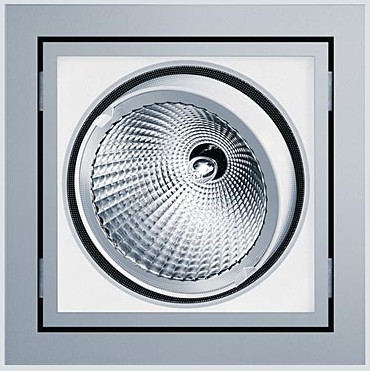
Zumtobel DISCUS Evolution LED spotlight system

DISCUS Evolution is an alternative to HIT systems with up to 42 W and halogen systems with up to 100 W

FLOS CAN CAN

Can Can and Mini Can Can by Marcel Wanders

FLOS KELVIN LED

Designed by Antonio Citterio with Toan Nguyen

DIESEL FOSCARINI

Successfull Living by Diesel Foscarini. Enamorate de esta colección.

REDES SOCIALES

Seguinos en las redes y no te pierdas de ninguna novedad.

Mostrando entradas con la etiqueta Profesional. Mostrar todas las entradas

domingo, 30 de junio de 2013

Ahorro Energético y LEDs en estacionamientos

Los estacionamientos son candidatos especialmente interesantes para utilizar luminarias de LEDs y sistemas de iluminación inteligente. 

Una Luminaria LED para esta aplicación consume 35 W en su maxima potencia y 15 W en modo de iluminación básica necesaria para iluminar dos plazas en un estacionamiento. Por otra parte para lograr los mismos resultados una luminaria fluorescente consume 75W en promedio.

Ademas de la eficiencia energética de los LEDs se pueden instalar sensores de movimiento que regulen la intensidad de la luz automaticamente.

Sensores y control inteligente.

La aplicación de un sistema de control inteligente utilizando sensores de presencia y movimiento permite disminuir aun más el consumo y aumentar la vida útil de las luminarias. Cuando un auto o un peaton se desplaza por el estacionamiento solo las luminarias cercanas aumentan a su potencia máxima  mientras que cuando no hay nadie las luminarias operan a un nivel  de consumo mucho menor para lograr una iluminación básica.

Utilizando este tipo de soluciones en conjunto se puede ahorrar hasta un 70% de consumo energético y disminuir notablemente los costos de mantenimiento.


jueves, 27 de junio de 2013

Lanzamiento Hambo cuadrado chico 2x26W


Empotrable para lamparas fluorescentes compactas TC-D, 2x26W, balasto electronico.

La linea Hambo cuenta con un diseño moderno y particular. Tanto para oficinas, lobbys de edificios, salas de reuniones y aplicaciones residenciales esta luminaria aporta un toque distintivo elegante y profesional.

domingo, 16 de junio de 2013

Guía de Instalación con Trafos & Dimers (Philips LED lamps)


A continuación compartimos una guía de instalación y puntos a tener en cuenta para la instalación y uso de lamparas LEDs en general y de las lamparas Philips en particular.

Tecnología LED - Una Nueva Tecnología

  • La tecnología de LED tiene un funcionamiento totalmente distinto
  • Basada en semiconductores y sistemas electrónicos en lugar de filametos gases etc.

Funcionamiento de los LED
  • Los LED como tal funcionan en DC (Corriente Continua) para lo cual incluyen un driver interno que les permite funcionar al conectarlas a AC (Corriente Alterna) 220V o 12V.
  • Al tener este driver interno que trasforma la corriente AC a DC, no es posible conectar las lámparas LED a corriente DC porque esto afectará la vida útil del producto.


Trafos & Lamparas LED
  • Utilizar siempre la equivalencia en Halógena de la lámpara LED, No el consumo para calcular la capacidad de lámparas por trafo.
  • Ejemplo1 : La lampara Master LED 10W MR16 12V es equivalente a una dicro halógena de 50W con lo cual vamos a tomar esta ultima potencia para calcular la capacidad del trafo.
  • Ejemplo2 : 
    1 Trafo 150W -> Capacidad Trafo = 3 Lámparas equivalentes a 50W por trafo (3 Lámparas Master LED 10-50W MR16 DIM 12V)
  • Usar preferiblemente los trafos Philips, los cuales están diseñados y probados justamente para funcionar con las lámparas LED de la misma marca.
  • Como segunda opción los trafos magnéticos tienen mayor grado de compatibilidad con lámparas LED que los trafos electrónicos.
Dimer y Transformadores en Lámparas LED


  • Los dimers y trasformadores del mercado actual han sido fabricados para ser 100% compatibles con tecnologías incandescentes, halógenas y fluorescentes entre otras.
  • Aunque las lamparas LED de Philips son especialmente fabricadas para poder ser instaladas con este tipo de sistemas, puede que no sean compatibles con todos los artefactos del mercado.
  • Las lámparas LED en general no funcionan bajo métodos de dimerización especiales como DALI, 1-10, DMX, PWM etc.
  • No todas las lámparas LED son dimerizables, primero consulte la especificación de la misma.
  • La dimerización en lámparas LED se comporta mejor en el apagado que al encendido de la lámpara.
  • Con la mayoría de dimers va a haber algún nivel de retraso en la dimerización con Lámparas LED
  • Algunas de las lámparas dimerizan solo hasta el 10% o 15%,
  • No mezclar diferentes tipos de lámparas (puede ser una Razon de Fliqueo)
Cantidad de Lámparas por Dimer

  • Debemos diferenciar primero si se trata de una instalación a 220V o a 12V

    • Instalacion 220V: 
      • Calcular la capacidad tomando 10% de la capacidad total del dimer y dividir por el consumo de la lámpara de la siguiente forma
      • Ejemplo: Dimer 500W de Capacidad & Master LED 6-50W GU10 220V
                                   
    • Instalacion 12V
      • Determinar la capacidad del trafo como del dimer en Watts (W), el dimer determinará la capacidad del sistema
      • Utilizar las relaciones que se indican a continuación para determinar el máximo de lámparas por sistema y por instalación de trafo
      • No usar mas de lo permitido por sistema
      • Ejemplo: Dimer Capacidad de 200W Trafo Capacidad de 150W Master LED 10-50W MR16 12V DIM


Nota: Desde la capacidad del trafo se podrían instalar 2 lámparas mas pero el dimer solo soporta 4 lámparas con lo cual el sistema llegaría hasta dicha capacidad máxima.

Fuente: Philips Product LED Lamps 2013


jueves, 13 de junio de 2013

PHILIPS MASTER LED DICRO MR16 12V Dimerizable (7W = 50W)

Presentación

Master LED MR16 12V Dimerizable es laserie de Philips más reciente para el reemplazo de Spots halógenos de Bajo Voltaje (12VAC).

No sólo utiliza la solución patentada por PHILIPS para garantizar la más amplia compatibilidad posible con los transformadores halógenos electrónicos estándar de 12V, sino que también ofrece una intensidad de haz que alcanza al de una lámpara PHILIPS Halogena Dicroica MR16.

El diseño de la Master LED MR16 12V Dimerizable garantiza su aplicabilidad 100% en cualquier luminaria en donde se encuentren las lámparas halógenas comunes.


Características del Diseño

  • Hasta un 90% de ahorro de energia en comparación con halógenas Philips de 50W MR16
  • Larga vida útil de 40.000 horas (B50,L70)  (o el equivalente a 27 años si se enciendeen forma continua durante 4 horas al día)
  • Adaptación a la mayoría de las luminarias basadas en GU5.3
  • Compatible con gran cantidad de transformadores y dimmers (consultar la tabla de compatibilidades)
  • Angulo de haz de 24 y 36 grados para una dispersión del haz claramente definida
  • Temperatura de color 2700K
  • No emite rayos UV ni IR
  • Respeto por el medio ambiente, sin mercurio u otras sustancias peligrosas
  • Cumplimiento de normas RoHS


MASTER LEDcandle by Philips (Lampara tipo Vela en LED 4W reemplazo de 25W)

Las nuevas bombillas de tipo vela MASTER LEDcandle consiguen efectos luminosos brillantes e incandescentes y resultan idóneas para la iluminación general y decorativa en el sector de hoteleria, así comoen el hogar. Las bombillas MASTER LEDcandles regulables aportan aúnmás eficacia y, a la vez, contribuyen a crear la ambientación deseada.

Montadas a la vista en arañas, apliques de pared o luminarias
modernas, las bombillas de vidrio transparente o esmerilado se
adaptan a todas las luminarias existentes con soporte E14 y B15.

Diseñados con las aportaciones de los fabricantes de arañas y con el
objetivo de realzar el atractivo estético de estas u otras luminarias, no solamente cuando están encendidas, estas lámparas se presentan en una clásica forma espigada con un exclusivo diseño.

Producen una bellísima luz cálida y brillante, posibilitando un importante ahorro de energía y la reducción de costes de mantenimiento. Estas velas enforma de llama se presentan en una clásica forma espigada con un exclusivo diseño que complementa perfectamente a las modernas velas LED.

martes, 11 de junio de 2013

Sheraton Buenos Aires Led Philips

Sheraton Buenos Aires Hotel & Convention Center

Caso de estudio

"En Sheraton Buenos Aires Hotel & Convention Center, se trabaja fuertemente en temas relacionados con el cuidado del medio ambiente, siendo uno de sus principales pilares la conservación de los recursos naturales y la ecología"
Ing. Ricardo Avellaneda Director de Ingeniería del Hotel

Antecedentes

El Sheraton Buenos Aires Hotel & Convention Center, ubicado en el corazón de la ciudad de Buenos Aires es un monumento para los pasajeros internacionales. Sus extensas instalaciones para reuniones y sus servicios permiten que los viajeros de negocios y los asistentes a las convenciones tengan una experiencia placentera. El Hotel de 24 pisos ofrece 742 habitaciones y suites espaciosas decoradas con muy buen gusto, incluyendo cinco pisos ejecutivos totalmente equipados para quienes viajan por negocios.

jueves, 28 de junio de 2012

LEDs in industrial applications by Zumtobel

When does it make sense to use LEDs in industrial applications?

Industrial applications make special demands on lighting: energy efficiency, long maintenance intervals and high lumen packages play an important role here.

In our new “Light for industry and engineering” application brochure, we show you when to use LEDs in industrial applications. The brochure includes up-to-date study results, a T16 vs. LED comparison as well as a compact summary of the most important trends and extensive application know-how with suggestions for practical lighting solutions.


To see the complete brochure please follow this link: 


Click Here to see the complete Brochure

lunes, 14 de mayo de 2012

Colección 2012/2013 Delta Light

Ya estan publicadas las novedades 2012/2013 de DeltaLight!!!.

Los invitamos a ver el catalogo en nuestro facebook o haciendo click en el siguiente link.


lunes, 19 de marzo de 2012

Kai-Uwe Bergmann expondrá en la UP


El arquitecto Kai-Uwe Bergmann, socio del prestigioso estudio de arquitectura BIG – Bjarke Ingels Group abrirá el ciclo lectivo 2012 de la Facultad de Arquitectura. La cita será el lunes 26 de marzo, a las 18:30hs, en la sede de Jean Jaurès 932.

BIG-Bjarke Ingels Group es un grupo con base en Nueva York y Copenhague de arquitectos, diseñadores y pensadores que operan en los campos de la arquitectura, el urbanismo, la investigación y el desarrollo. BIG ha creado una reputación por completar los edificios que están en programación y ser técnicamente innovador, ya que son concientes de los costos y el  consumo de recursos.

Su producción arquitectónica  demuestra una alta sensibilidad hacia  las demandas particulares de contexto, del sitio y del programa. Los proyectos de BIG recientemente terminados incluyen el pabellón danés en la Expo Mundial de Shanghai (2010) y La Casa 8 (2010) siendo distinguida recientemente con el Premio Nacional de Honor AIA y el premio Wall Street Journal a la innovación del año. Los proyectos que se están diseñando en América del Norte, incluyen la base  600 West Tower 57 en la ciudad de Nueva York diseñada para Durst Fetner Residencial que iniciará la construcción en la primavera de 2012 y el próximo  Centro de Arte Kimball  en Park City, Utah.

Acerca del arquitecto

Kai-Uwe Bergmann, socio de BIG,  trae su experiencia a las propuestas de todo el mundo, incluido el trabajo en Asia, Europa, Oriente Medio y los Estados Unidos. Kai-Uwe dirige el gran desarrollo de negocios que actualmente tiene la administración que trabaja en más de 10 países diferentes. Además de estas funciones, Kai-Uwe es también Director de Comunicaciones. Registrado como un arquitecto en los EE.UU., Reino Unido y Dinamarca, Kai-Uwe es también un arquitecto certificado LEED AP, fue director de proyecto del  primer plan maestro de Carbon Neutral en  Asia Central - Zira Island, en Bakú, Azerbaiyán. Además de su práctica arquitectónica, Kai-Uwe ha estado activo como Profesor Visitante en la Escuela de IE Universidad de Arquitectura y Gestión del Diseño en Madrid y ha actuado como jurado en muchos premios nacionales e internacionales.

http://www.palermo.edu/arquitectura/eventos/Bergmann-expondra-en-universidad-palermo.html

jueves, 15 de marzo de 2012

DarkoLIghting + Buquebus + Leds: DarkoLighting iluminará primer ferry a Gas Natural para el trayecto Buenos Aires Montevideo


DarkoLighting fue seleccionado para realizar el  suministro de luminarias para el primer barco a gas natural que fuera adquirido por Buquebus y cuya  construcción está a cargo del astillero australiano Incat Tasmania Pty Ltd.


El proyecto, dirigido por DarkoLighting involucrará tres de las mas importantes fabricantes en el mundo de la iluminación: Vossloh, Zumtobel y Philips.


La empresa de transporte de pasajeros Buquebus será la poseedora del primer buque de alta velocidad y capacidad impulsado por gas natural licuado (GNL), fabricado por la firma de construcción naval Incat Tasmania Pty Ltd. La nave cubrirá la ruta habitual entre las capitales de Uruguay y Argentina.


Implementar motores que funcionen en base al gas natural “representa un paso significativo en el movimiento global”, y “un impulso para reemplazar los viejos motores con estos nuevos que no contaminan”, señaló el presidente de Incat, Robert Clifford.


Clifford también destacó que será el catamarán más limpio para el medio ambiente y más rápido del mundo, con una velocidad de maniobra promedio de 50 nudos (poco más de 90 kilómetros por hora). 


Entre las principales características de la nave destacan sus capacidades de 1.000 pasajeros y 153 automóviles en bodega, sus tres categorías de pasaje con sectores de turismo, negocios y primera clase, y los aproximadamente 1.000 metros cuadrados de su free shop, que lo convierten en el mayor comercio de este tipo a bordo de un catamarán. 


La nave, que aún no posee nombre propio pero cuyo modelo se denomina “Incat 069”, será la octava adquisición que Buquebus le realiza a la naviera australiana. Directivos de la firma estiman que su construcción finalizará para la primavera del 2012, lo que permitiría estrenarla en la temporada estival 2012-2013. 

lunes, 7 de noviembre de 2011

Swarovski + Zumtobel + DarkoLighting

Durante el 2011 Swarovski planificó, abrió y remodelo dos tiendas muy importantes y DarkoLighting los acompaño en el suministro de luminarias Zumtobel para ambas tiendas.

Una de las tiendas ya terminadas se encuentra en la esquina de las calles Cordoba y Suipacha mientras que la segunda tienda todavía en ejecución se encuentra en el conocido shopping Unicenter.


Ambos proyectos fueron especificados directamente en Europa y DarkoLighting fue la empresa seleccionada para la provisión de lamparas y luminarias de altisimo nivel profesional.

Tanto las luminarias como las lamparas utilizadas fueron especialmente seleccionadas para destacar los productos de Swarovski en su máximo esplendor.

La linea de luminarias utilizada de ZUMTOBEL se denomina 2LIGHT C MINI. 


La gama 2 LIGHT se destaca en particular gracias a su particular característica de iluminación: la luz directa proyectada a través del reflector, sumada al adicional componente de luz difusa, generan una suave - y a la vez emotiva y vital - atmósfera lumínica. Sobre todo este especial efecto lumínico es lo que distingue al 2LIGHT de los sistemas de downlights convencionales. Gracias al novedoso principio de  “reflector dividido”, la equilibrada proporción de luz directa y de luz difusa suministra una suave iluminación de agradable claridad, muy semejante a la luz del día. Simultáneamente, es palpable la emotividad deliberadamente transmitida por la combinación de luz dirigida y luz suave-difusa, generándose acentos decorativos y sugerentes.


Apropiada para lámparas HIT de hasta los 35 vatios y lámparas QT de hasta 74 vatios, también la luminaria 2 LIGHT MINI para montaje empotrado, en versiones de 2 y 3 módulos, constituye un óptimo complemento para las aplicaciones en tiendas y salas de venta. Su cabezal de basculación cardánica dirige el flujo luminoso precisamente hacia el objeto deseado. En adición, tanto su patentado cierre „easy-clean“ como su tipo de protección IP44 son garantes de un sencillo y seguro mantenimiento. 


La combinación de luz y sonido bajo una misma cubierta es otra de las novedades en el marco del concepto 2 LIGHT de Zumtobel: provista de altavoces Revox, la luminaria 2 LIGHT MINI continúa prestando al techo una apariencia tranquila y apacible, a la vez que sumerge a la sala en una luz brillante y expresiva. Cuesta trabajo creer que dentro del diminuto cuerpo del downlight pueda alojarse un altavoz. Esta ingeniosa combinación ofrece luz y sonido al cliente en todo momento.

jueves, 21 de julio de 2011

Nuevas Lineas para proyectos institucionales

Para los que ya estaban aburridos de las luminarias y de la iluminación tradicional estuvimos en la feria mas importante de iluminación de Europa y nos trajimos muchas novedades para compartir.

Presentamos en esta oportunidad una nueva linea de artefactos que estaran disponibles para que puedan evaluar en sus proyectos.

Por favor no duden en consultarnos, estamos para eso. Hay muchas novedades para destacarse y hacer algo diferente

Como siempre pueden ver mas fotos en nuestro Facebook haciendo click aqui, no se olviden de hacerse Fan y estar al dia con todo lo ultimo sobre iluminación.


iluminacion

iluminacion

iluminacion

iluminacion

lunes, 30 de mayo de 2011

Controlling LEDs - Conclusion

Note that just because a fixture and the desired control use the same control technology (ex: 0-10V) that does not mean they will perform well together. This is especially true with forward and reverse phase control, due to their lack of a formal standard. However, even control technologies that have a standard do not indicate anything about performance, they only pertain to compatibility.

domingo, 15 de mayo de 2011

Controlling LEDs Part 8 - What is the minimum or maximum number of LED fixtures/lamps that can be connected to one dimmer?

What is the minimum or maximum number of LED fixtures/lamps that can be connected to one dimmer?


A common problem with LED system operation involves overloading the driver. LED drivers are rated for a maximum load (in volts, amps, and/or watts) that must not be exceeded. Similarly, some LED drivers may not perform well if too little load is put on them.

The number of lamps able to be installed on a single phase control dimmer may seem like an easy question to answer. However, it is not as simple as looking at your 600-watt dimmer and dividing 600 by the 15-watt LED lamp you have selected to determine that 60 lamps can be used on a circuit. You may only be able to use 100 watts of the LED load on a dimmer rated for 600 watts. While the LED lamp may only draw 10 watts continuously, it may have a start-up inrush current or repetitive current during every half-cycle that makes it appear much worse. That 15 watt LED lamp will appear to the dimmer as a 100 watt incandescent load, so if you use more than 90 watts of that LED, you will overload the dimmer.

Neglecting this transient current can put significant stress on the dimmer and can cause premature product failure or undesired system performance (such as excessive acoustic noise). This transient electrical stress may limit the maximum number of lamps you can install on one dimmer. The average stress that has been observed is the equivalent of a 100W incandescent, even for LED loads that are less than 20W. 

A minimum number of fixtures may be required to operate a dimmer because of the 25-watt to 40-watt minimum load that most incandescent dimmers require to operate correctly under all conditions. When using incandescent bulbs, the minimum load requirement was easily met with usually only a single bulb. However, with LEDs, four or more loads may be needed on a dimmer in order to meet the required minimum load.

martes, 10 de mayo de 2011

Controlling LEDs Part 7 - What is the dimming performance of the product?

Each manufacturer defines dimming in a different way, but what you need to know is whether the dimming will be distracting or have noticeable, unexpected drops in light. The public’s experience with incandescent dimming is that it is smooth and continuous. Specifically, a change in the control (dimmer) position should be reflected by an equal change in light level. There should be no abrupt change in light level as the light source is being dimmed. 

Even more important is ensuring that there are no points of flicker in the dimming range. Flicker is the unexpected modulation of light level that is visible to the human eye. Flicker can come from many sources, including line noise, control noise, component tolerance, and LED driver circuit design. Flicker can be continuous (happening all of the time), or intermittent (only happening some of the time or at certain light levels). A good driver should account for all of these factors and still provide flicker-free, smooth, and continuous dimming.

Other undesired behavior can occur when dimming an LED. A properly designed driver should not have any of the following problems:

  • Pop-on: After being dimmed to a low light level and switched off, sometimes LED bulbs will not turn on until the dimmer’s slider is moved up. This is referred to as “pop-on,” which is especially challenging in 3-way situations where lights can be turned on/off from different locations, not just using the dimmer.
  • Drop-out: There should be no drop-out, so the light should only turn off when the switch is turned off. This can be achieved by utilizing the low end trim settings available on many wallbox and system level dimmers to ensure that the lights remain on at their lowest light level at the bottom of the dimmer’s travel.
  • Dead-travel: Adjusting the control without a corresponding change in light level is undesirable
  • Audible Noise: Buzzing from the lamp, or from the dimmer due to the lamp.
  • Shimmer: Small changes in light intensity. This can usually only be noticed at medium to low light levels, and often only at the periphery of vision.

martes, 3 de mayo de 2011

Controlling LEDs Part 6 - What is the dimming range of the product?

Incandescent lamps dim to below one percent perceived light, which looks like an orange filament glow. The dimming range of an LED lamp or fixture can vary greatly from one device to another.
Some may dim to a minimum level of only 50 percent, while a different product may dim to one percent. Additionally, manufacturers will quote measured light numbers, but consumers are familiar with perceived light. 

What is the difference?


Measured light output is the quantifiable value of light measured by a light meter or similar device. This is the dimming percentage indicated on LED product specification sheets.


Perceived light is the amount of light that your eye interprets because of pupil dilation. The eye’s pupil dilates at lower light levels, causing the amount of light to be perceived higher than measured (e.g., 20 percent measured light equals 45 percent perceived light). The equation for determining perceived light is to take the square root of the measured light percentage (e.g. √0.2 = 0.45). You need to select the dimming range of your fixture or lamp that will be suitable for your application. A product that dims to 20 percent measured light (45 percent perceived) wouldn’t make sense in a media room, but may be the energy-saving solution necessary for an office. If an LED fixture or lamp spec sheet does not state the dimming range, you should contact the manufacturer for that important piece of information.

It is important to know that the dimming range of a product is based solely on the driver. The integral driver will determine the dimmability of a screw-in LED retrofit lamp and an external driver will determine the dimmability of an LED fixture. Each dimmer may have varying features that will affect your ability to trim out flicker if it exists and minimum load requirements, but it will not affect the dimmability of a product. The driver will determine the low-end light level and the performance. Finally, be aware that the dimming  range of a single product may vary based on what control is used.


jueves, 28 de abril de 2011

Controlling LEDs Part 4 - Five questions when trying to dim an LED product?

Before you commit yourself or your customer to investing in LED technology you need to understand its limitations, especially when it comes to dimming control compatibility. Many LED luminaire manufacturers are new to the lighting industry and are not familiar with the multitude of control types and the corresponding product design requirements that accompany them. This has resulted in “dimmable” products that do not work as claimed, that never turn off completely, or that flicker. These are major problems that need to be addressed so that consumers do not associate all LEDs with poor performance and become averse to using them. High-performing LED products do exist, but you need to ask the right questions to make sure you have chosen one of those products appropriately.

Answering the following five questions will allow you to align your expectations with the potential
performance of your selected LED dimming system.

  1. What type of LED product am I using: an LED lamp or LED fixture?
  2. What is the dimming range of the product?
  3. What is the dimming performance of the product?
  4. What is the minimum or maximum number of fixtures/lamps that can be connected to one dimmer?
  5. On what type of control does the LED product operate?
The following articles detail what you need to know to answer these questions.

Stay tuned...

Extracted from "Controlling LEDs" Copyright 01/2011 Lutron Electronics Co. Inc. P/N 367-2035 REV. B

sábado, 23 de abril de 2011

Controlling LEDs Part 3 - Why Dim LEDs?

Similar to fluorescent, incandescent and other conventional light sources, dimming LEDs saves energy at a roughly 1:1 ratio. This means that if you dim LEDs down to 50% of their light output you will save nearly 50% of your energy usage. So not only do you save by using a more efficient source, you save even more energy by dimming LEDs.


Dimming LEDs also makes them run cooler, which should extend the life of the electronic components of the driver, as well as the phosphor on the LEDs. This will extend their life, doubling or tripling the LEDs lumen maintenance. Research is ongoing to better quantify the relationship of dimming LEDs and lifetime extension.


Dimming any lamp, be it incandescent, CFL or LED enhances ambiance, so whether you are in a restaurant, theater or presentation space, you can create the environment that the lighting designer intended.

Dimming offers many other benefits, including:

  • Space Flexibility 
    • Dimming control systems provide for space flexibility so that what may be an office space today could easily be converted into a call center tomorrow, or a gymnasium can be used as a theater or cafeteria just by adjusting the control of your lighting. Your home and your workplace should be designed to complement your needs. As your needs change throughout the day, your lighting should adapt as well; bright to read a book, but dim for computer use. Whether you are at home or at work, lighting control can create a comfortable atmosphere to support your activities throughout the day.
  • Enhanced Safety 
    • Lighting controls can enhance the safety and security of your home. You can control both interior and exterior lights from the car as you approach your driveway to ensure optimal visibility and can even connect to security systems to turn on lights in case of an emergency.
  • Increased Productivity 
    • Lighting control also increases productivity allowing the user to select the level he/she needs to reduce eye strain and fatigue so that they can work at peak performance for more of the day, or so students can concentrate better and learn more at home or at school. 

jueves, 21 de abril de 2011

Controlling LEDs Part 2 - Advantages and Limitations of LEDs for General Illumination


LEDs Advantages for General Illumination
  • High Efficacy (Lumens per Watt) LED-based lighting fixtures can achieve efficacies ranging from 25 LPW to over 80 LPW, compared to an incandescent efficacy of 5-10 LPW.
  • Longevity LEDs can achieve useful lifetimes ranging from 25,000 hours to up to 100,000 hours, compared to ~1000 hours for an incandescent. 
  • LEDs do not contain hazardous materials as compared to mercury vapor in CFLi bulbs.


LEDs Limitations for General Illumination

  • Higher cost High Brightness LEDs, necessary for general illumination, are expensive. They also require electronic drivers to convert conventional AC voltage to discrete DC voltages for the LED arrays.
  • Limited Applications Due to the relatively young technology and timeline for wide acceptance, LED-based lighting fixtures are not always available for every application or aesthetic requirement. 
  • Controls compatibility Due to the wide range of LED-based lighting product types, not all LED lamps are dimmable, and the ones that can be dimmed may be limited in dimming performance and system compatibility. 

Enhanced by Zemanta

miércoles, 20 de abril de 2011

Controlling LEDs Part 1

Ten years ago, many people didn’t even know what an LED was. Today, they’re the new hot item on the shelves – and everyone wants to use them. Often, designers do not know how to control LEDs or they have had negative experiences working with them. This articles will provide a brief overview of what an LED is and how to use LEDs for general illumination applications and the advantages and limitations of doing so. It will also go into detail about why you should consider dimming LEDs and what questions need to be answered in order to dim LEDs properly to meet your expectations. The overall goal of this article is to make you more comfortable with using LEDs
on your projects.


What is an LED?


A Light Emitting Diode (LED) is an electronic device that produces light when an electrical current is passed through it. The wavelength (or color) of light that is emitted is dependent on the materials from which the LED is made. LEDs are available in many colors, including red, blue, amber, green, and near-UV colors, with lumen outputs ranging from 10 lumens to 200 lumens. The LEDs used predominantly in general illumination applications are “Phosphor Converted Blue” LEDs, which are blue LEDs that have a layer of yellow phosphor placed over the LED. The phosphor absorbs some of the blue light, and emits yellow light. When the unabsorbed blue light mixes with the yellow light it creates what your eye perceives as “white” light.


IMAGE OF DIFFERENT TYPES OF LEDS.


From Controlling_LEDs by LUTRON